Opening gallery
Marvel Comic Book Museum
A single-route exhibition of Marvel history told through threshold issues, creator portraits, editorial culture, and franchise objects staged as museum evidence.
Whether you're new to Marvel or curious about its history as cultural system, follow the route in order. Each room builds on the last. Companion galleries deepen specific themes without pulling you away from the main story.
Curatorial note shows context
The route stays chronology-first. Companion rooms deepen the story with faces, publications, and collection walls instead of interrupting it.
Reinvention object shows shift
Room 1 · Foundation
Golden Age Origins
1939–1950s
The exhibition begins with Timely Comics, wartime iconography, and the moment Marvel first proves that costumed heroes can become mass culture.
Curatorial claim
Visitors meet the first issue as an origin artifact rather than a trivia answer.
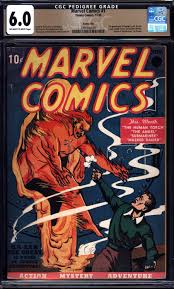
Marvel Comics #1
The first issue established the publisher's early identity through Namor and the original Human Torch.
Goodman, Simon, and Kirby
The origin room centers publishing strategy, patriotism, and visual mythmaking as one system.
Room 2 · Reinvention
Marvel Age Expansion
1961–1970s
This room treats the Silver Age as Marvel's decisive reinvention: a shared universe, flawed heroes, and creators who made personality part of the brand.
What changes here
The room emphasizes how relatability, ensemble storytelling, and creator voice became Marvel's real differentiators.
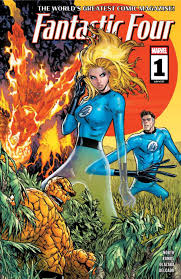
Fantastic Four #1
This issue marks the tonal and structural reset that begins Marvel's modern voice.
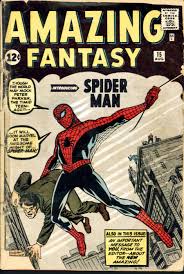
Amazing Fantasy #15
Spider-Man makes teenage anxiety, guilt, and urban life central to superhero storytelling.
Stan Lee
Helped position Marvel as witty, self-aware, and emotionally human in the 1960s.
Steve Ditko
Gave Spider-Man and Doctor Strange their defining visual and psychological tension.
Room 3 · Scale
Crossover and Cinematic Age
1980s–Present
The final room follows Marvel from darker prestige storytelling into crossover spectacle and the global film infrastructure of the MCU.
What the room proves
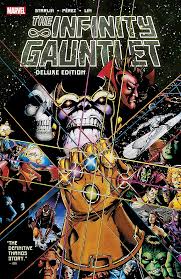
This room presents crossover events and the MCU as an exhibit about scale, not just popularity.
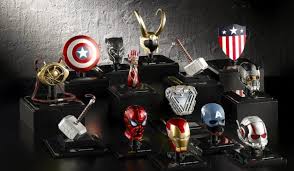
Secret Wars / Infinity Gauntlet / Iron Man
Together these works show Marvel moving from event comics to global cinematic infrastructure.
From writer prestige to franchise architecture
Claremont deepens long-form emotional stakes while Feige converts continuity into a release strategy.
Companion room · People and studios
Put faces and institutions beside the objects.
This section grounds the exhibition in creators, publishers, and studio systems so Marvel does not feel like a sequence of anonymous icons.






Martin Goodman
Founded Timely Comics and created the commercial conditions for Marvel's earliest identity.
Jack Kirby
Co-created Captain America, the Fantastic Four, the X-Men, and much of Marvel's visual language.
Stan Lee
Helped position Marvel as witty, self-aware, and emotionally human in the 1960s.
Steve Ditko
Gave Spider-Man and Doctor Strange their defining visual and psychological tension.
Chris Claremont
Expanded the X-Men into a long-form emotional and political saga.
Kevin Feige
Oversaw the MCU as a connected franchise system built from comics logic.
Timely Comics
Marvel begins here as a pulp-era publisher shaped by wartime readership and fast-moving print economics.
Marvel Studios
Marvel Studios converts serialized comics logic into blockbuster cinematic release strategy.
Companion room · Publication lineage
Key issues and release moments sharpen the proof.
The reading map works as a sequence of proof objects: each issue matters because it changes what Marvel can become next.
Marvel Comics #1
The first issue established the publisher's early identity through Namor and the original Human Torch.
Fantastic Four #1
This issue marks the tonal and structural reset that begins Marvel's modern voice.
Amazing Fantasy #15
Spider-Man makes teenage anxiety, guilt, and urban life central to superhero storytelling.
Secret Wars / Infinity Gauntlet / Iron Man
Together these works show Marvel moving from event comics to global cinematic infrastructure.
Gallery room · Collection highlights
Objects that make Marvel visible.
Continue
Return to the threshold and follow the route again.
The chronology gives the spine, the lineage room sharpens the proof, and the collection wall leaves the objects visible in memory.